
How to take cuttings: Build a dense, naturalistic garden for less
Growing plants from cuttings is easier than you might think, and it’ll save you a whole load of cash. Learn how to do it in this video…
Learning how to take cuttings is non-negotiable if you want to create a beautiful naturalistic garden.
Why? Because healthy gardens are full of plants. But plants are expensive… if you buy them.
So don’t buy them. Grow them!
In this video, I’ll show you how to take cuttings, from start to finish.
Before showing you how to take cuttings, let’s clarify what I mean by “taking cuttings”.
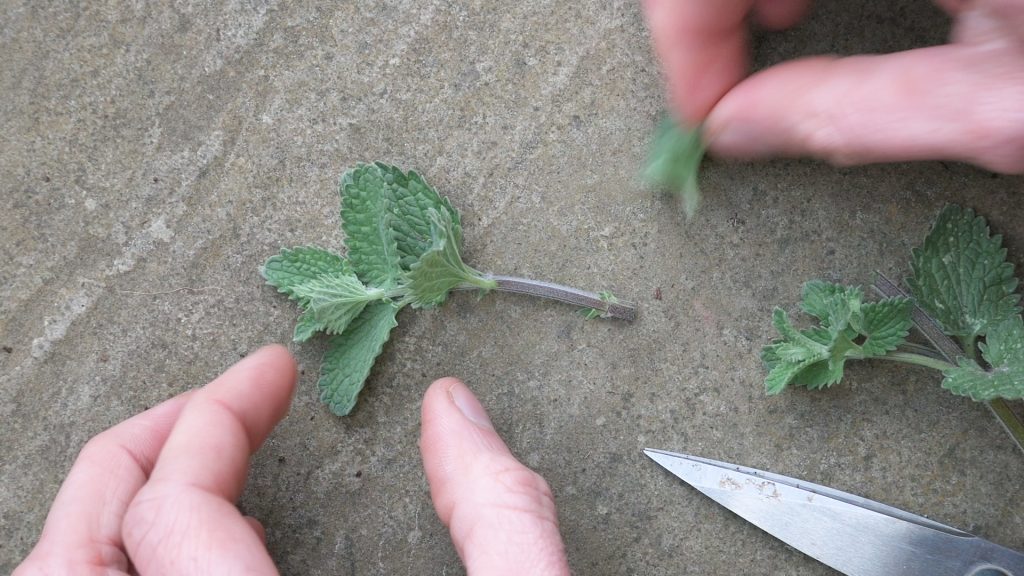
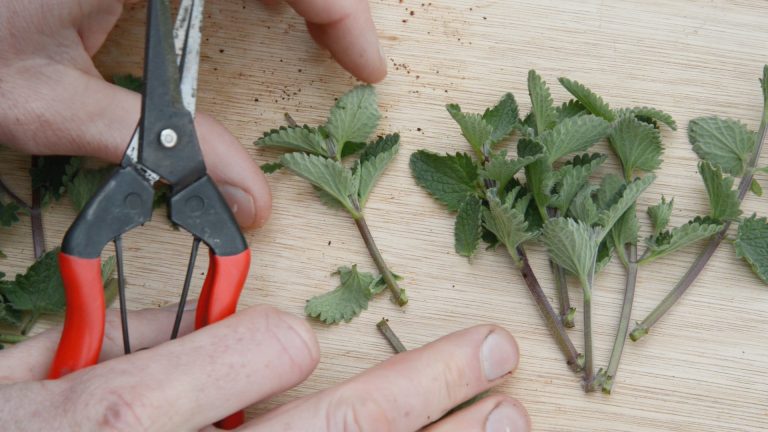
Taking cuttings is a form of plant propagation (making new plants from scratch). It involves removing a short section of stem from an existing plant and encouraging it to grow new roots, forming a completely new plant.
That’s crazy, I know. But also amazingly cool.
Taking cuttings is:
Although a huge range of plants can be grown from cuttings, not all plants are suitable.
And this might be hard to hear… but experimentation is part of the learning process here. If it’s any consolation, I’ve taken a fair few cuttings that haven’t rooted, but we live and learn
When that happens, we can always try taking the cuttings again at a different time of the year. Or we can try a different method of propagation, like seed sowing, or division.
With that said, I have some guidance on which plants to grow from cuttings:
Some plants that I’ve grown from cuttings recently include Aster x frikartii ‘Mönch’, Calamintha nepeta, Lamium orvala, Lythrum salicaria, Nepeta govaniana, Perovskia ‘Blue Spire’, Verbena bonariensis, Glandularia corymbosa.
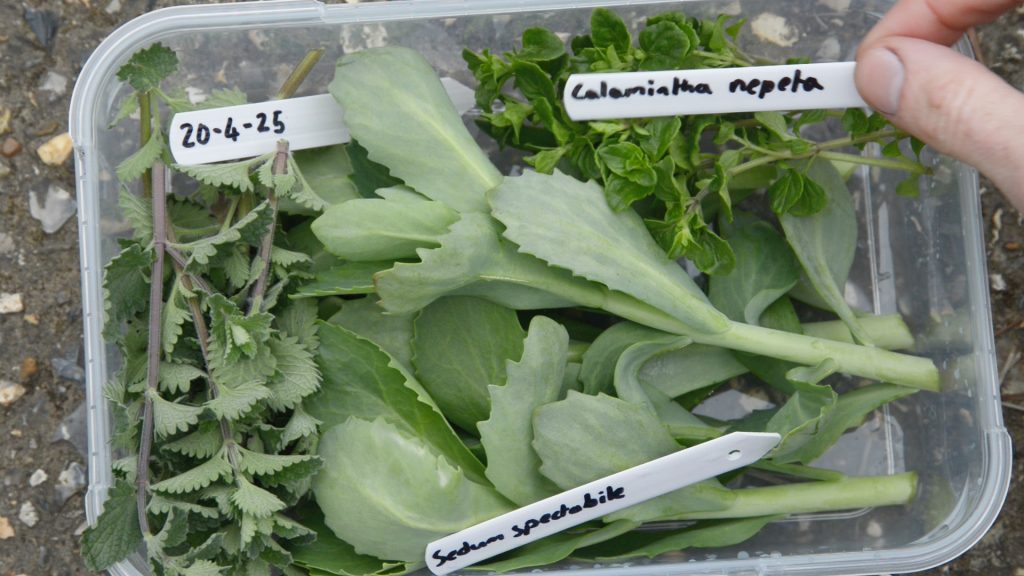
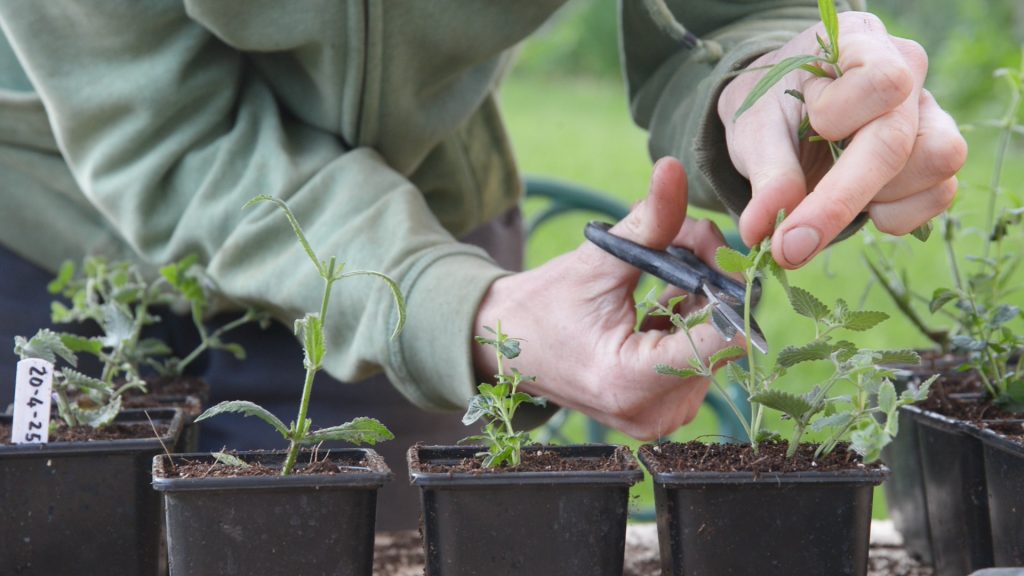
Now you have an idea about which plants might grow well from cuttings, it’s time to take the “cutting material” from your “parent plants”.
My advice is to:
Starting with the right material gives you the best chance of success.
Top tip: I walk around the garden with a lidded Tupperware to put my cutting material in. I add a splash of water to the inside of the container. This creates a humid environment and prevents my cuttings from wilting before I’ve had a chance to move onto steps 3 and 4.
Once you’ve collected all of your material, we need to do two things:
This is straightforward, but it may take a few attempts to build confidence:
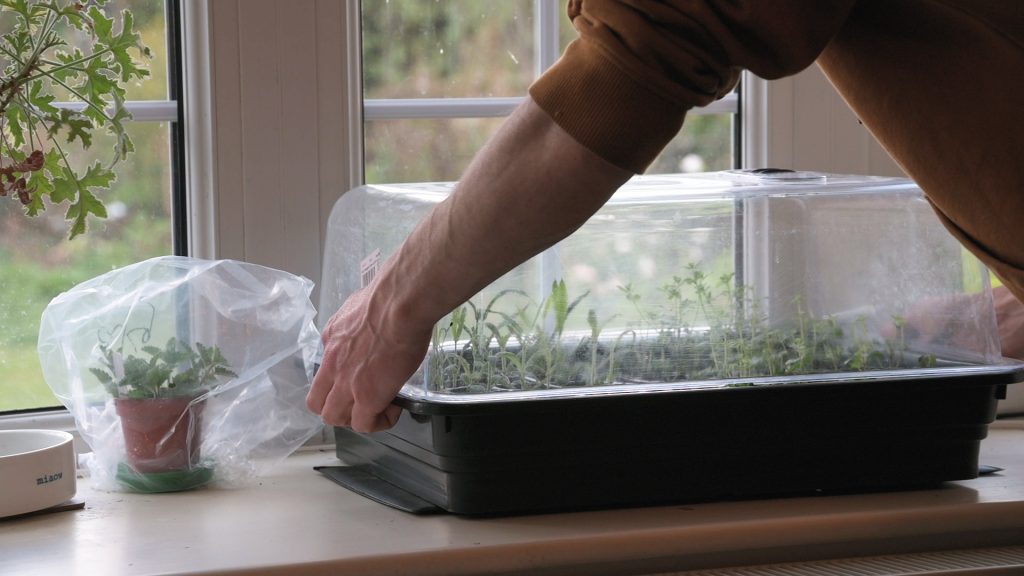
A big part of mastering plant propagation is getting the propagation environment right. Here’s what you need to know.
Your cuttings need:
However, consistency is more important than perfection. So don’t worry if you can’t get things perfect.
As a rough guide, I find that a north-facing windowsill usually provides stable conditions, which work well for rooting cuttings.
I’ll be sure to make a video in the future that shows how you can make the perfect home propagation environment without having to fork out too much cash.
With any luck, after 1-8 weeks, your cuttings will have rooted (some plants are much quicker than others).
Congratulations! Woo-hoo!
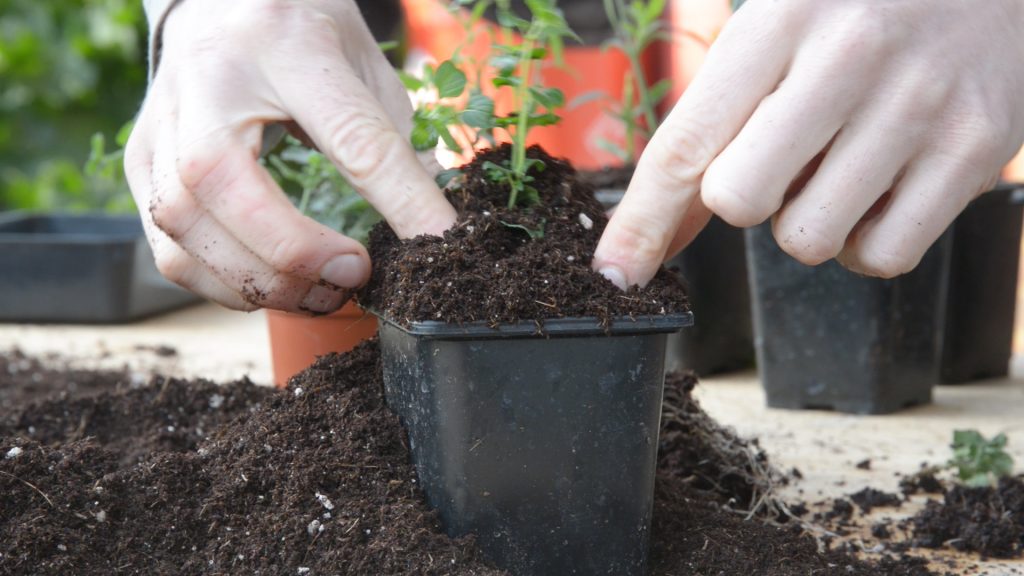
When this happens, the final step is potting up your plants and growing them on until they’ve filled the pot with roots.
Signs that your cuttings have rooted include:
Once they’ve rooted:
This really is one of the most important skills you can learn as a gardener. I know it can feel like a lot to get your head around if you haven’t taken cuttings before, but it’s easier than you might think.
I’d love it if this video encourages you to give cuttings a go, because I know how much difference this could make to your garden.
So please do let me know if you’re going to have a go. I’d also love to hear which cuttings you’ve had success with already
Happy propagating.
Joe

I'm a gardener, educator, consultant, and planting designer. Learn with me 1-to-1, or join my mentoring group and community.

Growing plants from cuttings is easier than you might think, and it’ll save you a whole load of cash. Learn how to do it in this video…
Sowing seed is a great way to save a load of money and build floral diversity in your garden…
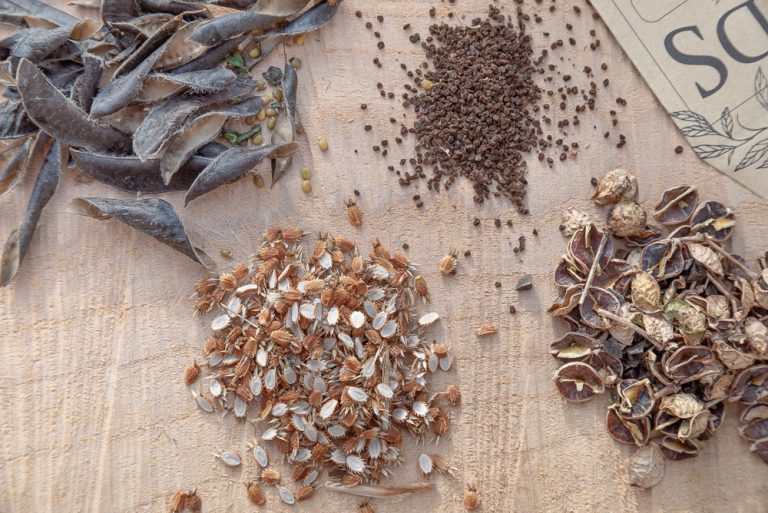
Saving seed is one of the best ways to increase planting density in your garden for free. Perfect if you want to help nature.
Get top gardening tips straight to your inbox, and hear about the latest horticultural events and blog posts.

This Post Has 2 Comments
Brilliant vid Joe, – direct, & to the point, informative and funny – your a natural with the camera and microphone, Thanks much!
Thank you for the great feedback Martin. I really appreciate it!
I hope your garden is growing along well. Lots of yellow rattle seedlings here which I’m really excited about!
All the best,
Joe